Entries tagged with “recipe”.
Did you find what you wanted?
Fri 24 Feb 2012
Posted by Bill under Blog
[10] Comments
I was at the Honest2Goodness (H2G) Market in Glasnevin on a recent Saturday (if you haven’t been, you must go–it’s fantastic) and was delighted to see that J. Hick and Sons were selling game at their stall: rabbit and venison. I picked up a pack of venison goulash (marinated in Ed Hick’s secret blend of spices) and a jointed wild rabbit. I love both but I’m a sucker for rabbit. Farmed rabbit tastes like really flavorsome chicken, but wild rabbit is unmistakably rabbity. As it was browning for the rabbit ragu (recipe below) I caught whiffs of fur and straw coming from the pan. It smelled wild and wonderful. The ragu made enough for two meals, one with pasta and another with grilled polenta.
Ed’s venison goulash makes for a really easy meal. My friend Caryna (of Caryna’s Cakes fame) said she made a very tasty stew in a half-hour with just a pack of the goulash, a can of tomatoes and an onion. The recipe below is a bit more work but really good as well. It also made two meals, one with toasted sourdough from Arun Bakery and buttered kale and another with some buttered, boiled new potatoes. By the way, Caryna and Arun Bakery both have stalls at the H2G Market–you can do your weekly shop there and help out amazing, local artisan producers.
Venison Stew
70g diced pancetta
500g Ed Hick’s venison goulash (or diced venison leg)
1 onion, diced
1 carrot, diced
1 stalk celery, diced
1/2 c red wine
500 ml beef broth
1/4 c sun-dried tomatoes, chopped (e.g. the smoked tomatoes from the Real Olive Company)
1 sprig thyme
1 bay leaf
100g unsalted butter, softened
100g flour
Heat the oven to 150C/300F/gas mark 2. In a skillet fry the pancetta on medium heat until golden and fat has rendered, about 7 minutes . Remove to a medium hob- and oven-safe casserole leaving the fat in the pan. Add the venison to the skillet and cook until well-browned on all sides, about ten minutes. Remove to casserole. Reduce heat, add the onion, carrot and celery and cook until tender, about ten minutes. Add the wine, increase the heat and cook until the wine is almost evaporated. Add the broth, tomatoes, thyme and bay and bring to a boil. Pour into the casserole. Cover the casserole and bake in the oven until the venison is tender, about two hours.
Meanwhile, make the beurre manie. Mix the flour and butter together in a bowl until a soft dough forms. Roll into small balls the size of marbles and place on a small parchment-covered rimmed sheet. Chill in the fridge. Remove the casserole and place on hob over medium heat. When the stew is simmering add two dough balls and stir until completely dissolved. Keep adding the beurre manie one ball at a time until the stew is glossy and the desired thickness (about six balls total).

Rabbit Ragu
125ml cup olive oil
1 rabbit, cut up (have your butcher do it)
salt and pepper
1/2 cup flour
2 onions, minced
1 carrot, minced
2 stalks celery, minced
2 fat cloves garlic
2 400g cans plum tomatoes, crushed
1 sprig thyme
2 bay leaves
500ml chicken stock
Parmigiano reggiano, grated
Heat 60ml olive oil in a large dutch oven over medium heat. Season the rabbit with salt and pepper and roll in the flour. Shake off the excess flour and add to hot oil. Cook until golden brown on both sides, about five minutes per side. Remove to a paper towel-lined plate to drain. To the pot add the remaining oil, onion, carrot and celery. Lower the heat to medium-low and cook until caramelized, stirring occasionally, about 30 minutes. Meanwhile, heat the oven to 140C/300F/gas mark 2. Add the tomatoes, thyme and bay leaves and cook another 30 minutes. Add the chicken stock and rabbit, increase the heat and bring to a boil. Cover, place in oven and cook until the rabbit is very tender, about 2 hours. Serve over pasta or polenta and top with grated Parmigiano. The rabbit can be left on the bone or shred and return to the sauce.

Thu 5 Jan 2012
Posted by Bill under Blog
[5] Comments
Potato dauphinoise (a.k.a scalloped potatoes, au gratin potatoes) is a perfect cold-rainy-weather, i.e. Irish-weather, dish. Cream, garlic, spuds, an interior that stays mouth-searingly molten like the sun for ages–what’s not to love? Well, it’s not exactly January post-holiday detox food so I thought I’d make it a bit less guilt-ridden by using some sweet potato, too. Mature Gubbeen cheese is fantastic with potatoes of all kinds so a light sprinkling goes on top.
The sweet earthiness of the sweet potato helps to cut through all the richness of the cream and cheese. It also adds loads of vitamin A and other good stuff. Cooking the potato mixture a bit on the hob before baking cuts down on the total cooking time and also helps it to cook more evenly. We had this as a main with a side of simply-cooked green lentils (River Cottage Veg Everyday, pp. 237) and a baby spinach and rocket salad.

Sweet Potato Dauphinoise
Inspired by River Cottage Veg Everyday
Serves 4 as a main
Per serving: 418 Calories, 19g fat, 6.9g fiber, 13.2g protein
30g of butter
500g floury potato
500g sweet potato
400ml cream
2 large cloves of garlic, smashed
a few sprigs of thyme, leaves only
1 bay leaf
1/4 tsp freshly-grated nutmeg
salt and pepper
100g mature Gubbeen cheese, grated
Preheat the oven to 180C/350F/Gas Mark 4.
Rub an 8x8x2″ square baking dish liberally with the butter. Peel and very thinly slice the potatoes and sweet potatoes. To a large saucepan add the potatoes, cream, garlic, thyme, bay leaf and nutmeg. Place on medium heat and bring to a simmer. Cook for about five minutes or until the cream starts to thicken. Season with salt and pepper.
Pour the mixture into the baking dish and spread evenly. Bake in the oven for 45 minutes or until tender and lightly browned and bubbling. Top with grated cheese, increase heat to 200C/400F/Gas Mark 6 and bake for another 5-10 minutes to melt and brown the cheese. Let cool 5 minutes before serving.
Notes
- For a more traditional dauphinoise leave out the sweet potatoes and use 1 kg of floury potatoes.
- Substitute double cream or whole milk for the cream depending on your mood.
- Use a different cheese. Glebe Brethan (or Gruyère or Comté ) would be great. So would a blue cheese like Cashel or Crozier.
Wed 7 Dec 2011
Posted by Sharon under Blog
[7] Comments
This year we were home for Thanksgiving. Home in this instance was Bill’s childhood home in Huntsville, Alabama.
We typically have two must-eats when we’re in Huntsville: Pork BBQ from Gibson’s #2 and fried catfish and hush puppies at Greenbrier. We knew we didn’t have time for a trip to Greenbrier this visit, but Bill’s mom, Peggy, said she’d have Gibson’s BBQ waiting for us when we arrived Wednesday evening. When Bill’s brother Joel heard about the Gibson’s plan, he had a better idea. I’ll smoke a pork butt for them, he said. Only one problem. Joel lives three hours away in Montgomery and wouldn’t be driving to Huntsville until Thursday. So, Joel overnighted the pork on dry-ice to Peggy’s and indeed it was waiting for us when we arrived. And it was truly remarkable. Pork BBQ in Northern Alabama is typically eaten with a vinegar and cayenne pepper sauce alongside a vinegar slaw. Joel had included sauce in his package, and Bill’s other brother Danny had brought over a bowl of slaw, so Bill and I feasted! Sorry Gibson’s, but I’m dining at Gunter’s from now all. All those Gunter boys can cook!
Not only did Joel smoke the best pork BBQ I have eaten, he smoked our Thanksgiving turkey. He brined the turkey with apple juice, orange juice, nutmeg, ground cloves, peppercorns, brown sugar, and kosher salt and smoked it over fruit wood for a few hours, finishing it in the oven. The turkey was perfect–moist, flavorful with tasty skin. He also brought up some of his lovely homebrew, a summer ale with honey and a hint of orange. It was sunny and 74°F/23.3°C, which passes for a summer day in Ireland, so summer ale was not out of place.

The Meal (clockwise from top left): Sweet Potato casserole, turkey, ham, Brussels sprouts with pancetta, jalapeno corn casserole, cornbread dressing with gravy, jellied cranberry sauce, cherry fluff; not pictured: field peas, dessert
I haven’t traveled all the regions of the US eating Thanksgiving dinners, but I imagine two things identify our Thanksgiving meal as Southern: 1) more than one casserole and 2) cornbread dressing. First of all, we call it dressing. Academics may debate the difference between stuffing and dressing–some say stuffing is cooked inside the bird, dressing outside–but I think they are basically the same thing. Cornbread dressing is a fave from both of our childhood Thanksgivings. A few times Bill has experimented with different types of dressing and savory bread puddings, but we keep coming back to cornbread dressing.
Sweet potatoes are a Thanksgiving staple, and for years were topped with marshmallows, but somewhere along the way everyone discovered that you could top sweet potatoes with a butter, brown sugar and pecan crust, and it has been a standard for a couple decades. This particular incarnation was straight from Paula Deen in all of its buttery glory. The potatoes are baked to intensify the potato flavor. A souffle mixture with egg is topped with the sugar crust, and this stuff is good y’all!
As amazing as Joel’s turkey was, I really enjoyed several slices of ham. Smoked ham is rare in Ireland, and I just love it.
The Brussels sprouts were Bill’s contribution. In 1998 Bill made a Thanksgiving Menu from Food & Wine Magazine which included Brussels Sprouts pan roasted with shallots and pancetta. These sprouts instantly became a must-have Thanksgiving dish for us, and have made more than one Brussels Sprouts convert. As many times as Bill has made this dish (it’s not just for Thanksgiving!) these were some of his best. The shallots and sprouts were browned and nicely caramelized and silky with pancetta “flavor.”

Our beloved Brussels sprouts
The corn casserole was new this year. I didn’t get the recipe but it must be similar to this one that mixes corn, cream cheese and jalapenos together and bakes them. (See the full recipe.) Can’t really go wrong with that. A spicy dish is welcome amongst all the rich foods on the T-day table.
Of course we had jellied cranberry sauce. I’m a purist when it comes to that can-shaped condiment.
And Cherry Fluff.
How does one describe Cherry Fluff? Does sweetened condensed milk, a can of crushed pineapple, chopped pecans, cool whip and a can of cherry pie filling paint a picture? It’s sweet and tart and fluffy and completely frivolous. In other words, a fab holiday food.

We love Cherry Fluff.
Along with cornbread dressing and Cherry Fluff, Bill had specifically requested field peas, so Joel cooked up a mess of them with a ham hock. I’m not a huge fan of field peas, but Bill was thrilled.
We didn’t even think about dessert until many hours after dinner, but when we did we had a caramel pumpkin pie and apple cake to choose from, or of course eat both. They were both delish, but I wound up eating more of the apple cake. Makes a great breakfast.

Fresh Apple Cake
This is the recipe (more or less) as passed to Peggy by her friend Myrtle.
Fresh Apple Cake
For cake
4-5 cups diced apples, mixed varieties (around a litre of apples)
2 cups sugar (400 g)
1/2 cup vegetable oil (240 ml)
1 cup chopped pecans (110 g)
2 eggs, well beaten
2 teaspoons vanilla (10 ml)
2 cups all purpose flour (240 g)
2 teaspoons baking soda (10 ml)
2 teaspoons cinnamon, or double if you like cinnamon (10-20 ml)
1 teaspoon salt (10 ml)
For glaze
1 cup brown sugar (170 g)
1 stick butter (110 g)
1/4 cup evaporated milk (60 ml)
- Heat oven to 350 degrees°F/180°C /gas mark 4.
- Mix apples and sugar thoroughly.
- Add oil, nuts, eggs and vanilla and stir.
- Mix dry ingredients together and add to apple mixture. Stir.
- Bake in a greased 13 x 9 inch pan for 1 hour. Remove from oven and leave cake in pan.
- For glaze, bring brown sugar, butter and evaporated milk to a hard boil for one minute.
- Pour immediately over cake.
And for your viewing pleasure, 50 seconds of Bill and me discussing Thanksgiving at this link http://www.rte.ie/tv/iwitness/. Look under the archives for the 24 November episode.
Wed 30 Nov 2011
Posted by Bill under Blog
[4] Comments
I love sweet potatoes. Baked, roasted as wedges, souffled and topped with pecan praline, simmered in a soup–it’s all good. And if you haven’t topped roast sweet potato wedges with chili, well, you haven’t lived. So when I saw this dead simple recipe for baked sweet potatoes with brown sugar and black pepper in the November 2011 issue of Saveur Magazine I knew I had to try it.
My first thought was to have them with a rocket salad for a light veggie dinner. But seeing as I had three packs of free-range boneless chicken breasts in the fridge (courtesy of a sale at Tesco–I’ll never see these again, I’m certain) I thought I should use a couple. I also had half a savoy cabbage and some lime-thyme compound butter leftover from Tuesday’s dinner so it was “clear out the fridge night.”
This technique for cooking boneless chicken breasts is pretty foolproof. They were tender and juicy with a good crust. The compound butter added just the right amount of fat and herby goodness. Buttered cabbage is also a favorite of mine and a tiny bit of chicken broth gives it savor. Sweet potatoes topped with brown sugar and butter are intrinsically delicious, but the black pepper adds intriguing spicy and aromatic flavors. Oh, and do all three components contain butter? Score.

Sautéed chicken breast with lime-thyme butter, butter-braised cabbage and roast sweet potato with brown sugar and black pepper
I’ve intentionally not included measurements so you can feel free to experiment and play with the recipes.
Sautéed Chicken Breasts
Boneless, skinless chicken breasts
Salt and pepper
Flour
Butter
Oil
Pour some flour onto a plate. About 1/4 cup is good for four breasts. Rinse the chicken breasts and pat dry thoroughly with paper towels. It’s important they be completely dry. Sprinkle both sides of each breast with salt and pepper. Be generous. Press both sides of each breast into the flour. You can leave each on the plate as you go or set it aside.
Heat some butter and oil in a skillet over medium-high heat. Swirl the butter in the skillet as it heats. After the foaming subsides shake the chicken breasts to rid them of the excess flour and lay them in the skillet, tenderloin side down.
Sauté the chicken until browned on one side, about four minutes. The fat should be sizzling but not burning. Turn with tongs and sauté another four to five minutes. The chicken should be firm to the touch and nicely browned. Remove to plates and top with slices of lime-thyme butter.
Notes
- The flour is important here because it prevents the outside of the chicken from getting hard. It also helps with browning.
- Use any oil you like: olive, rapeseed, vegetable, what-have-you.
- Use all oil instead of butter, but the chicken won’t brown as well.
- Instead of the thyme-lime butter, swirl the fat in the pan with these combinations and pour over the chicken
- Capers, lemon juice and parsley
- Chopped olives, lemon juice, thyme and chile flakes
- Chopped tomatoes (fresh or sundried) and basil
- Minced garlic, cilantro (fresh coriander) and lime juice
Lime-thyme Compound Butter
Unsalted butter, softened
Fresh thyme, minced
Lime
Salt
Microwave the butter in a bowl for 10-20 seconds to soften, if necessary. Don’t let it melt. Stir in the thyme, zest, a bit of juice and a pinch of salt. Spoon onto one end of some cling film. Lift the end of the cling film and use it to roll the butter into a log. Wrap the butter log in the film and refrigerate until firm.
Notes
- You can top all manner of things with a compound butter: poached or sautéed fish, steaks, pork chops.
- Instead of lime use lemon or orange
- Instead of thyme use parsley, cilantro, dill or fennel fronds
Butter-braised Cabbage
Cabbage
Butter
Salt and pepper
Chicken stock
Cut the cabbage into quarters lengthwise and cut out the core. If the cabbage is large cut the quarters in half again. Cut crosswise into fine shreds. Rinse in a colander but don’t shake the water off.
Melt the butter in a sauté pan (a frying pan with straight sides) or dutch oven over medium heat. Add the cabbage and salt and pepper to taste, stir and cover. Cook until tender, about ten minutes, stirring occasionally and finish with a few spoons of chicken stock.
Notes
- If you don’t have chicken stock handy use a bit of boullion powder and water. I love a product called Better Then Boullion but I don’t think it’s available in Europe. Marigold Boullion is a great vegetarian option.
- Savoy cabbage is great but any will do. Green or white cabbage will take longer to cook and sweetheart or york cabbage will take less time.
Baked Sweet Potatoes with Brown Sugar and Black Pepper
(Inspired by Saveur Magazine)
Sweet potatoes (large ones)
Unsalted butter
Dark brown sugar
Fresh-ground black pepper
Kosher or flakes sea salt
Heat oven to 425F, 220C, gas mark 7. Place sweet potatoes on a foil-lined baking sheet and bake until soft, about 1 hour and 15 minutes. Remove potatoes from oven and allow to cool for 10 minutes. Split potatoes open and put a knob of butter and spoon of sugar into each potato. Season liberally (seriously, go nuts here, and I forbid you to use pre-ground) with black pepper. Finish with salt to taste.
Notes
- Please, please use freshly-ground black pepper.
Wed 29 Jun 2011
Posted by Bill under Blog
1 Comment

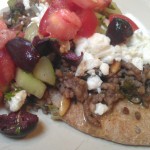
My apologies for the crappy photo–I had already tasted the salad and couldn’t take the time out from eating for a proper photo.
Man, is this good. Panzanella is a Tuscan salad of bread and tomatoes. It’s a great use for stale bread, and tonight I happened to have some stale homemade wholemeal focaccia. It’s best in the summer when the tomatoes are the tastiest, but cherry tomatoes are fairly good all year. It would be sublime with juicy, ripe garden tomatoes. The bread soaks up the tomato dressing so the salad is fairly dry. The feta and olives try to take it away from Tuscany in the direction of Greece but the basil keeps it firmly in Italy. This is adapted from a recipe published in the July 2011 issue of Cooks Illustrated.
Ingredients
1/3 cup extra-virgin olive oil
2 tbsp Red wine vinegar
Salt & pepper
4 cups solid, crusty bread torn into 1-inch chunks
400g cherry tomatoes, halved
1/2 cucumber, peeled, cut in half, seeded and sliced thin
1 shallot or small red onion, sliced thin
2 tbsp chopped fresh basil
1/4 cup crumbled feta cheese
1/4 cup pitted kalamata olives
Instructions
Preheat the oven to 215 C (425 F). Toss the bread with 2 tbsp of the olive oil and 1/4 tsp of salt. Spread in a single layer on a rimmed baking sheet and bake in the oven for 15-20 minutes. Stir it once or twice if you don’t have a fan oven. When it’s lightly brown and toasty remove it and let cool.
Meanwhile, toss the tomatoes with 1/4 tsp salt in a large bowl. Dump in a colander and let drain over the bowl for 15-20 minutes.
Whisk the vinegar and remaining olive oil in the bowl with the juice drained from the tomatoes. Add the bread and some pepper, toss and let sit for 10 minutes, stirring occasionally.
Add the remaining ingredients and toss. Salt and pepper to taste.
Serves 2.
Hints
You must use a really solid bread here or it will turn to mush. Sourdough from La Brea (available at SuperValu and sometimes Tesco) or Soul Bakery would be great.
Use the best olive oil you can afford. It makes a huge difference.
Leave out the feta and/or olives if you don’t like them.